
Both methods can produce a good plank floor when the product and site suit the system. The better choice depends on your substrate, the feel you want underfoot and the work included in your installation quote.
What is the difference?
A floating floor is assembled over an appropriate underlay without bonding the whole underside to the substrate. The boards form a connected floor that needs room to move. Depending on the joint, boards may click together or require adhesive in the tongue and groove.
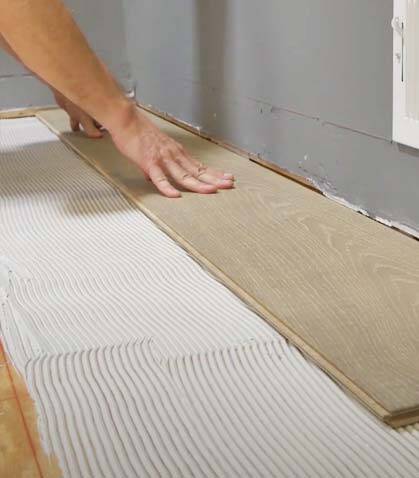
Direct stick, also called glue down, bonds the boards to a prepared substrate using a compatible flooring adhesive. It is a complete installation system: the substrate, moisture controls, adhesive and board must work together.
Do not choose solely from the phrase ‘engineered timber’. Check the instructions for the exact board. A method approved for one product may not be approved for another.
How will it feel and sound?
Direct-stick flooring generally has a firmer feel underfoot, while floating flooring can feel slightly softer over its underlay. Both retain the warmth and character of real timber. A well-prepared base and careful installation help achieve a comfortable finished floor.
For apartments, check the body corporate’s flooring requirements before booking installation. Your installer can use those requirements when selecting the installation system and underlay.
Any existing loose or moving areas should be addressed by the installer during preparation, giving the new timber a sound base.
The substrate comes first
Have the installer assess flatness, strength, moisture and any existing coverings before agreeing a method. A clean-looking concrete slab is not proof that it is ready for timber. An existing tile floor also needs assessment, including the integrity of the tiles and their bond.
Ask which preparation work is included in the quote and what would be charged separately. Door heights, transitions, skirting and fixed cabinetry can affect the detail of either system.
Follow the specific installation instructions for expansion space and room layout. Do not assume that a floating floor can be trapped beneath fixed joinery or that every long run can be installed without a transition.
Compare the full installation cost
A lower laying rate does not necessarily mean a lower total. Compare preparation, underlay or adhesive, moisture treatment, trims and any additional work on the same basis.
Check access and timing as well as cost. Ask when furniture can return and when the floor can receive normal traffic. Adhesive and finishing requirements vary; there is no single wait time that applies to every project.
Our cost guide shows an illustrative plank budget using current display rates. Your installer should confirm the actual method, scope and price after inspecting the site.

Herringbone and future repairs
Milton Lane’s herringbone flooring requires glue-down installation. Do not apply floating-plank instructions to the pattern, and use an installer experienced with herringbone set-out.
Timber also offers options for local repairs if damage occurs. The appropriate repair depends on the board, finish and location of the damage.
Keep any usable offcuts or spare boards after installation for possible future repairs, along with your product details.
A simple installation plan
Choose your Milton Lane timber, measure your rooms and agree the installation scope with your installer. Our downloadable guides explain both methods and provide practical installation guidance.
- Select floating or direct stick to suit the product and subfloor.
- Include subfloor preparation and moisture checks in the installation scope.
- Allow for underlay or adhesive, trims and finishing details.
- For apartments, share any body corporate requirements with the installer.
- Agree the installation date and when furniture can be moved back.
Start with a sample
Compare the colour, texture and finish at home before choosing your floor. We can help you narrow down the options and check the practical details of your project.
Order samples